Exposed 2: Party Lab Edition
- 4.4
- Rating
- 500.00K
- Installs
- Free
- Price

 Analysis by App-foxy
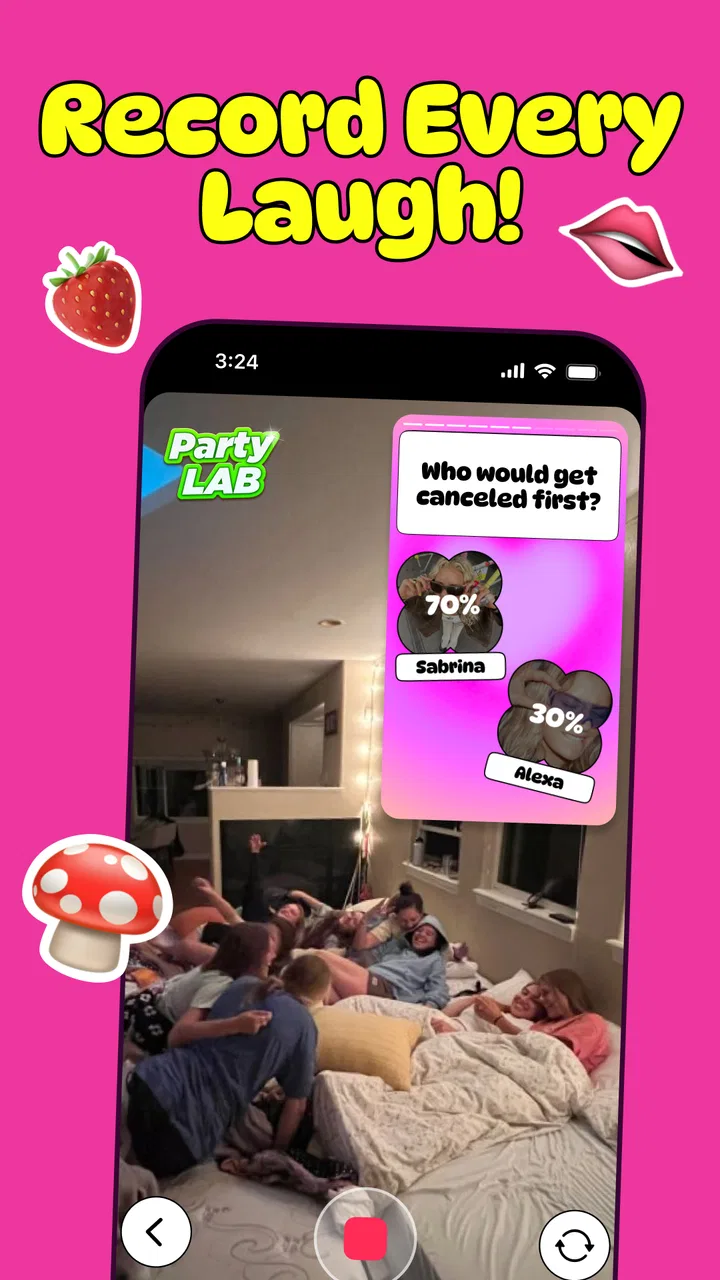
Exposed 2: Party Lab Edition is the kind of trivia game I would open when a group has run out of conversation but is not ready to call the night over. It is built around exposing friends through cheeky party prompts rather than testing serious general knowledge, so its real appeal comes from the reactions around the phone. In my experience, that makes it much more suitable for a relaxed group of people who already know one another than for strangers meeting for the first time.
MindShark Games presents it as a free game for Android, with a Teen content rating and optional purchases ranging from $6.99 to $23.99 per item. The app has reached over 100 thousand installs and holds a 4.4 average from roughly 805 ratings, which suggests that the central party idea connects with a meaningful audience. Those figures are encouraging, but they do not answer the most important question: does the fun survive after the first few sessions?
From instant laughs to a repeatable party routine
When the first burst of laughter settles, I think the useful question is whether the group can make the game part of a comfortable routine rather than stretching one session until it drags. I’d pay attention to who gets to steer the pace and whether everyone can opt out without explanation; those small choices shape whether the next gathering feels inviting. That leads to the practical test of repeat play and lasting value.
You May Also Like

 Blood Strike: 2.5 Anniversary
Blood Strike’s Loadouts Turn Every Drop Into a Tactical Gamble
A close look at Blood Strike’s custom loadouts: how fast access to signature weapons reshapes its battle royale rhythm, rewards preparation, and narrows the gap between fights.

 Pandora - Music & Podcasts
Pandora’s Music Is Easy to Start, but Harder to Recover
Pandora’s strength is its low-effort path from a seed to a station. Its weak spot is how much confidence it asks you to place in connection, setup, and quiet recovery.

 8 Ball Pool
 Is Built on Rivalries, Rematches, and Routine
A close look at the rivalries, rematches, shared routines, and unanswered safety questions that turn a quick pool match into a persistent mobile community.

 Samsung Music
’s Quiet Strength Is Playing What You Already Own
Its reach comes less from spectacle than from dependable access to a personal library. That simplicity is both the app’s strongest retention engine and its ceiling.

 AccuWeather: Weather Radar
AccuWeather Review: A Quick, Clear Forecast for Everyday Decisions
For everyday plans, the best forecast is the one you can understand quickly. AccuWeather makes rain timing, radar, and local conditions easy to act on, with a few trade-offs.

 Hill Climb Racing
Why Hill Climb Racing Still Turns Crashes Into One More Run
A tiny car, a bumpy hill and one more upgrade: Hill Climb Racing keeps resurfacing because its simple chaos makes every near-miss feel personal.
More From Our News Desk



Why the first week feels lively
The strongest part of the experience is the low barrier to starting. Nobody needs to study rules, build a deck, or understand a complicated scoring system before joining in. One person can bring out the phone, explain that the game is about revealing amusing or embarrassing opinions, and let the group discover the tone together. That immediacy is valuable at a dorm gathering, a casual house party, or a small evening with friends who are comfortable teasing one another.
The exposed-friends format also creates a useful social rhythm. A prompt appears, people react, and the discussion often becomes more entertaining than the original question. Someone may defend an answer, accuse a friend of being predictable, or reveal a story that had nothing to do with the game until that moment. I found that this makes the app feel less like a quiz with a winner and more like a conversation starter with a playful structure.
That distinction matters. If you are looking for a conventional trivia app with factual questions, timed rounds, and a clear knowledge-based champion, this is not the best match. Its category may be trivia, but the experience is closer to a social confession game. The entertainment depends heavily on the personalities at the table, and the same prompt can be hilarious with one group and uncomfortable with another.
Choosing the right group before opening it
I would be selective about who joins. The Teen rating is a useful reminder that the material and tone are not designed for young children or formal family gatherings. Before starting, I would make sure everyone understands that the game may invite personal answers and that skipping a question should be treated as normal rather than suspicious. That small agreement prevents the app from turning a joke into pressure.
A practical way to use it is to begin with a short session instead of announcing an entire evening around it. Give the group a chance to see whether the humor suits them. If people are laughing and volunteering stories, continue. If answers become guarded or one player is repeatedly singled out, switch activities rather than forcing the format to work. The game is at its best when participation feels voluntary.
For a realistic everyday scenario, imagine four friends in a dorm common room after dinner. Conversation has slowed, but everyone still wants something social that does not require a television or a board-game setup. One person launches the app, the group agrees on a comfortable boundary, and a few rounds fill the next half hour. That is a strong use case: quick entertainment, almost no preparation, and enough prompts to revive a quiet gathering.
What makes the novelty work
The first-week appeal comes from uncertainty. Players do not know which friend will be named, which answer will cause a debate, or which apparently harmless prompt will expose a surprising habit. That unpredictability gives the opening sessions energy. It also rewards groups that enjoy playful gossip more than groups that want strategic depth.
My first useful tip is to avoid playing every round at maximum intensity. If the group treats every prompt as an invitation to interrogate someone, the atmosphere can become tiring quickly. Let some questions pass with a laugh and move on. The app works better when it remains a source of sparks rather than becoming the sole focus of the night.
A second tip is to rotate who holds the phone. Even when the game is designed for shared play, one person controlling the device can quietly become the host, deciding the pace and influencing which reactions receive attention. Passing the phone keeps the session more balanced and makes quieter players feel involved instead of observed.
How it compares with familiar alternatives
Compared with a standard trivia quiz, this game offers less objective competition and more personal interaction. A quiz can remain satisfying even when players barely know each other because correct answers provide the structure. Here, familiarity is an advantage: knowing a friend’s habits makes an exposed answer funnier and gives the group more material to discuss.
Compared with physical party-card games, the app is easier to carry and quicker to start, but it may feel less tangible. A box of cards can become part of a recurring ritual, while a phone can also bring distractions, notifications, or the temptation to leave the game. The digital format is convenient, yet it places more responsibility on the group to protect the shared attention that makes the experience work.
Compared with truth-or-dare style activities, Exposed 2: Party Lab Edition appears better suited to groups that want prompts and reactions without turning every turn into a performance. Still, people who dislike personal questions may prefer a word game, a factual quiz, or a cooperative puzzle. The right alternative depends less on the app’s quality than on the group’s comfort with being noticed.
Can it earn a place beyond the first month?
I’d judge a return visit by what the group wants from the evening, not by a fixed schedule: a familiar circle may need a break, while a new mix of friends can bring fresh reactions. I’d also separate curiosity about optional purchases from evidence that the free experience has become a regular favorite. The key is deciding whether this is a handy occasional icebreaker or something your group genuinely asks to bring back.
Where recurring value comes from
After the initial surprise fades, the game needs more than a funny first impression to justify repeated use. Its lasting value comes from changing groups and changing circumstances. A prompt that feels familiar among close friends can work differently at a reunion, a dorm gathering, or a mixed group where people have only recently met. The social context supplies much of the replay value.
I would not treat it as a daily habit in the way I might use a puzzle or a traditional knowledge quiz. It is better as a return-to activity: keep it available, forget about it for a while, and bring it back when a suitable group appears. That spacing helps preserve the surprise. Playing it every night with the same people would likely reveal its limits faster because the group’s running jokes and expected answers would become predictable.
The free entry point helps with that occasional role. A group can try the core experience without committing to a purchase, which is important when nobody knows whether the tone will suit them. The presence of in-app purchases means I would spend time with the free experience first and only consider paying if the group repeatedly asks for more. Buying content before establishing that habit would be an unnecessary gamble.
There is also a useful hosting workflow that is easy to overlook. I would decide in advance how long the session should last, perhaps using the game as a warm-up before another activity rather than as the entire evening. Set a natural stopping point while people are still enjoying it. Ending after a good exchange leaves the app associated with energy, whereas continuing through every quiet patch can make the final impression feel flat.
The maintenance burden is social, not technical
The current version is 1.47, and the game requires Android 7.0 or later, so compatibility should be comfortable for many Android users with relatively older devices. Still, the main maintenance burden is not installing or updating the app. It is maintaining the conditions that let the party format work: a willing group, a suitable atmosphere, and a host who notices when a question has crossed someone’s boundary.
That is a real cost. A solo game can be opened whenever the player wants, but this one depends on other people’s availability and mood. If you are the person who always has to organize the gathering, you may find that the app adds another hosting responsibility rather than removing one. Someone must introduce it, manage the pace, and keep the conversation friendly.
I would also keep the phone’s role clear. Put it where everyone can see it, but do not let the session become an excuse for unrelated scrolling. If the device stays in one person’s hand while others check messages, the shared feeling disappears. A simple rule such as “the phone stays with the current turn” can make the activity feel more like a group game and less like one person showing an app to everyone else.
Another practical trade-off concerns privacy and comfort. Even without treating every answer as serious, personal prompts can expose differences in humor, relationships, or boundaries. I recommend agreeing that nobody has to explain an answer and that a player may pass without being challenged. This is not merely etiquette; it protects the repeat value of the game. People will return when they remember feeling amused rather than cornered.
What causes fatigue over time
The biggest source of fatigue is repetition within a fixed social circle. Once friends have learned one another’s predictable answers, the reveal becomes less revealing. The same personalities may still generate jokes, but the app’s prompts have less work to do. That is why I see it as a periodic party tool rather than a permanent centerpiece.
A second source is uneven participation. Outgoing players can dominate exposed-question games because they are comfortable making accusations and telling stories. Quiet players may become the subject of jokes without shaping the conversation themselves. I would counter this by inviting everyone to react, not just the person named, and by changing the pace when one player is receiving too much attention.
A third issue is tonal mismatch. Some groups enjoy teasing only when it stays harmless; others expect bold, embarrassing humor. If the app’s style lands between those expectations, the session may feel awkward rather than funny. The Teen rating should encourage a thoughtful choice of audience, but the rating alone cannot predict how a particular group will respond.
There is also a financial fatigue risk. The game is free to start, while optional items cost between $6.99 and $23.99 each. That range makes it especially important to judge purchases by actual repeat use rather than by the excitement of the first session. If the free material already supports occasional gatherings, paying may not add enough value. If a regular group keeps returning and wants expanded variety, the decision becomes easier to justify, but I would still treat it as a group entertainment expense rather than an essential upgrade.
Who should keep it installed
I would recommend keeping it installed if you regularly host small social gatherings, enjoy playful personal questions, and want something faster than setting up a physical game. It is particularly useful for friends who already share enough trust to laugh at being exposed without turning every answer into a judgment. The app can also help restart conversation when a group has become comfortable enough to be honest but not so comfortable that everyone wants to sit silently.
I would skip it if you mainly play alone, want factual knowledge challenges, dislike attention-focused humor, or need a game that works equally well with strangers. I would also choose another option for children, formal family events, or groups where people are unlikely to agree on boundaries. A cooperative trivia game would be the safer choice when the goal is shared problem-solving rather than personal revelation.
For iOS users, I would check the appropriate platform availability before planning an event rather than assuming that every member of the group can join from the same type of device. For Android users, the operating-system requirement is modest, but the more important preparation is social: install it before the gathering, decide who will host the first round, and make sure the group wants this kind of humor.
My long-term verdict
Exposed 2: Party Lab Edition earns lasting space as a situational party app, not as an everyday game. Its opening appeal is clear: it starts quickly, creates conversation, and turns knowledge of friends into the main source of entertainment. MindShark Games has chosen a format that can produce memorable moments with very little setup, and the 4.4 average reflects that many players find the idea effective.
My reservation is that the app does not create its own long-term depth. The group supplies the chemistry, the stories, and much of the replay value. Once the same players have exhausted the surprise, sessions can become repetitive or uneven unless the app is used sparingly and with different social circles. Optional purchases may extend interest, but they do not replace the need for a compatible audience.
In practical terms, I would download it for a dorm night, a small house party, or a reunion where people already enjoy teasing one another. I would not make it the only planned activity, and I would not pressure anyone to answer. Used as a short, well-timed conversation starter, it can be genuinely funny. Used too often or with the wrong group, the exposed-friends premise becomes its own limitation.
My final recommendation is simple: keep it as a lightweight social tool, not a permanent daily habit. The free starting point makes trying it easy, the Teen rating signals the need for a mature audience, and the current version supports a straightforward Android setup. If your friends enjoy personal, mischievous trivia and can respect a pass, this game is worth a place on the phone for occasional gatherings. If you want dependable solo replay, strategic competition, or questions with objectively correct answers, a conventional trivia alternative will serve you better after the novelty wears off.
FAQs for Exposed 2: Party Lab Edition
01What is Exposed 2: Party Lab Edition about?
Exposed 2: Party Lab Edition is a social game designed to spice up gatherings with friends. It features a variety of fun and engaging challenges that encourage players to reveal secrets, perform tasks, and enjoy laughter-filled moments. The game is perfect for parties, offering a unique way to bond and entertain.
02How many players are needed to play Exposed 2: Party Lab Edition?
Exposed 2: Party Lab Edition is best played with a group, ideally between 4 to 10 players. The more participants, the more dynamic and entertaining the game becomes, as it thrives on diverse interactions and a mix of personalities to enhance the party experience.
03Is Exposed 2: Party Lab Edition suitable for all ages?
Exposed 2: Party Lab Edition is primarily designed for adults and older teens, as it includes content that might not be suitable for younger audiences. It’s recommended to review the app's content and settings to ensure it aligns with the players' comfort levels and age appropriateness.
04Are there any in-app purchases in Exposed 2: Party Lab Edition?
Yes, Exposed 2: Party Lab Edition offers in-app purchases. These may include additional game packs or features that enhance the gameplay experience. While the base game is entertaining, these extras can add more variety and depth, making it even more engaging during parties.
05Does Exposed 2: Party Lab Edition require an internet connection?
Exposed 2: Party Lab Edition does not require a constant internet connection for gameplay, making it convenient for use in various settings. However, an internet connection might be needed for downloading updates or accessing certain in-app features, ensuring a seamless and up-to-date experience.
Pros
- Engaging multiplayer party mode.
- Wide variety of mini-games.
- User-friendly interface.
- Regular updates with new content.
- Customizable character options.
Cons
- Requires constant internet connection.
- Some mini-games feel repetitive.
- In-app purchases can be pricey.
- Occasional connectivity issues.
- Limited offline functionality.

Exposed 2: Party Lab Edition
Gallery